Why would you do that, Cristopher?!!
For years I had a very simple theory about cinematic footage.
Somewhere out there, Christopher Nolan, David Fincher, Roger Deakins and a few other people were sitting around a table, secretly discussing color grading settings they refused to share with the rest of us. This theory explained a lot. Why their movies looked incredible and why my videos looked… considerably less incredible.
Maybe the problem was me. (doubt it) So I did what every aspiring creator does. I downloaded LUTs. I watched tutorials. I spent hours moving sliders left and right with the confidence of a man who had absolutely no idea what he was doing.
And then one day I accidentally discovered that the biggest difference between amateur footage and cinematic footage usually isn’t color grading at all.
It’s what happened before the color grading.
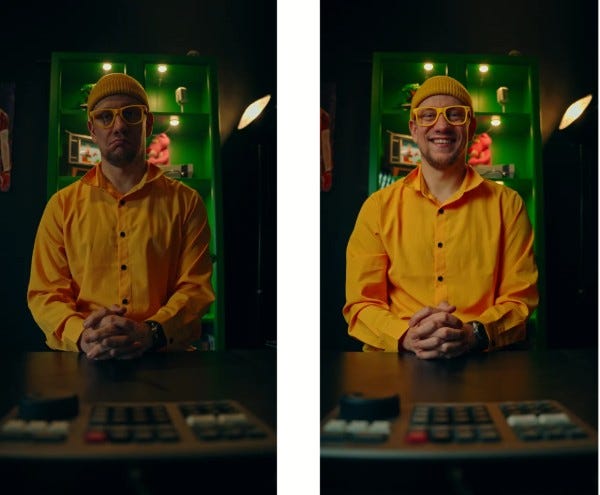
You see these two frames. Same location. Same me. Same camera. Even the exact same color grade in DaVinci.
And yet — one looks tired. Flat. Slightly disappointing.
The other looks cinematic and...alive?
Why?
Here’s the part that ruins the romance:
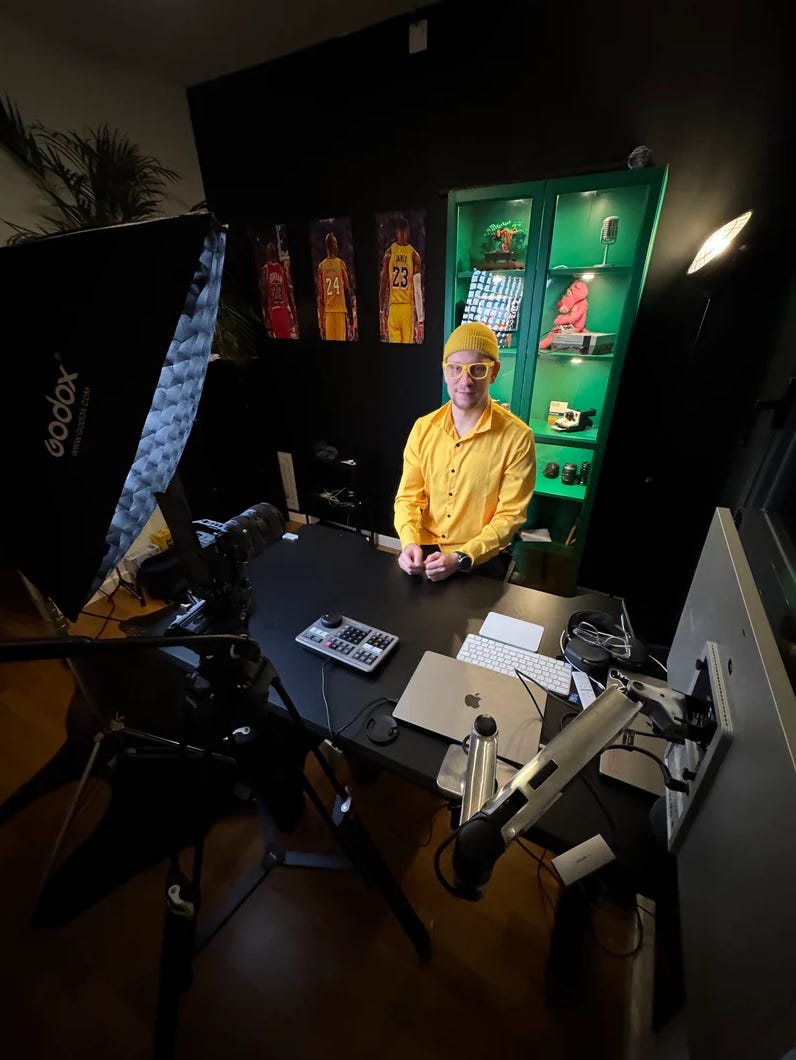
In the second frame, I used proper light. That’s it. What a shocker, right? 😁
Color grading starts long before you open your editing software. It starts when you decide where to stand, where the light is coming from, and what exactly you’re putting into the frame.
One mistake I see all the time is people treating a shot as a flat image. Subject in the middle, background behind them, done.
But cinematic images usually have depth. Try building your frame in layers: something in the foreground, your subject in the middle, and the background behind them. Suddenly the image feels less like a screenshot and more like a place you could actually walk into.
The second thing is light direction.
Most beginners put light directly in front of themselves because it feels safe. Unfortunately, safety is rarely cinematic. Try moving the light 45 or even 90 degrees to the side. Better yet, film from the shadow side. Side light creates contrast, shape and texture. It gives faces dimension.
And here’s the beautifully simple logic:
Bright colors are easy to darken.
Dark, underexposed colors are much harder to rescue.
When you add light, you expand your possibilities in post-production.
When you don’t, you spend hours trying to save what was never really there.
This is also why people shoot in log slightly overexposed.
Yes, it looks too bright.
Yes, it feels wrong at first.
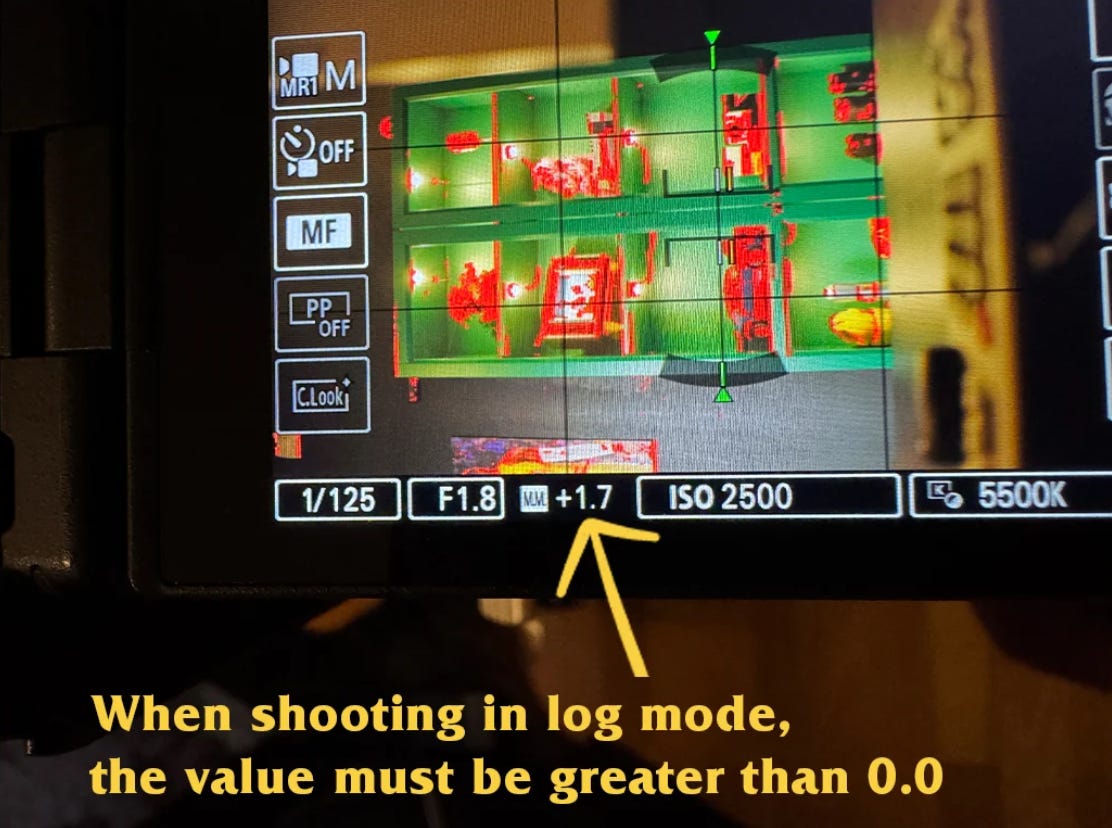
But look at the waveform. When the image is slightly overexposed, you have a wide range to work with. So much data. So many options.
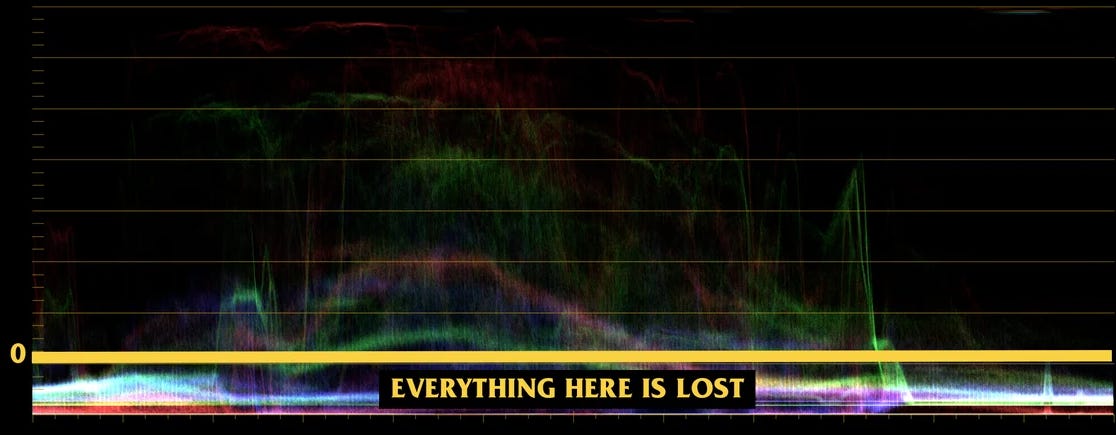
Now look at an underexposed image. The graph sinks. The lower values collapse. Information disappears.
And once color information is gone, it doesn’t come back because you politely asked.
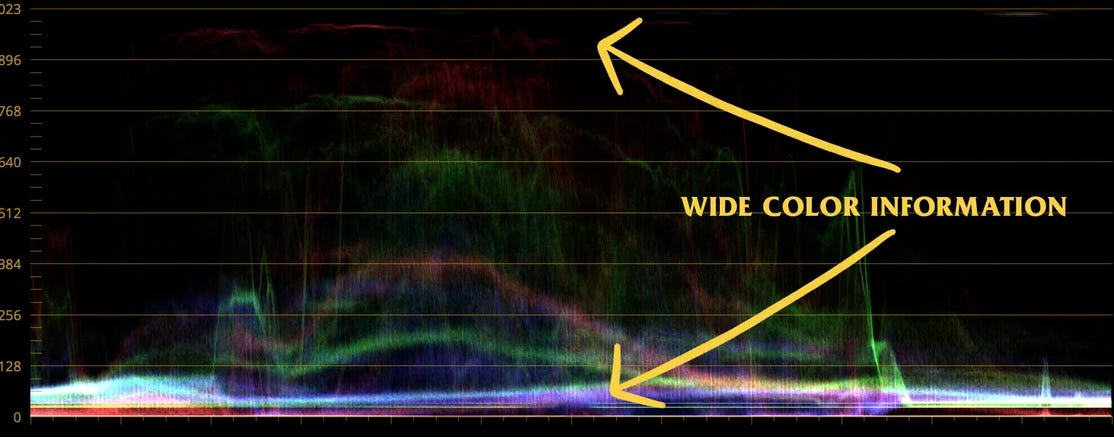
Technically, this is simplified. But imagine the histogram sliding down and crushing everything at the bottom. That’s what underexposure does. It quietly steals your future flexibility.
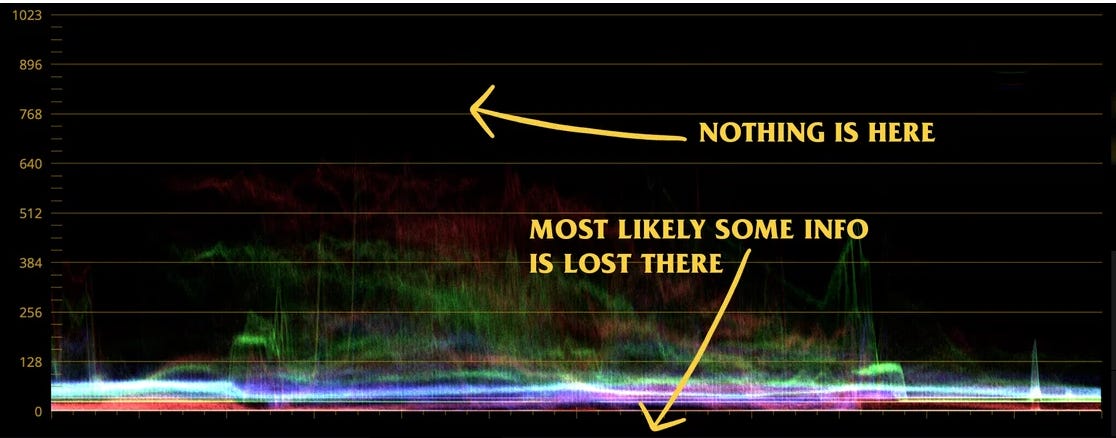
And this doesn’t apply only to artificial light indoors.
When shooting outside, always search for good light. Side light, not backlight. Texture, not silhouette. Depth, not struggle.
You don’t fix bad light with color grading. You fix bad light with better light.
The perfect color grade isn’t a preset.
It’s preparation.
And while we’re talking about things people forget: cinematic footage is only half the story.
A surprising amount of “cinematic feeling” comes from sound.
Footsteps. Clothes moving. A coffee cup touching a table. Wind. City ambience. A door closing somewhere in the background.
Most people spend hours tweaking colors and then leave the original camera audio untouched.
Meanwhile a few layers of thoughtful sound design can make even a simple shot feel expensive.
You can record sounds yourself, use libraries like Artlist or Epidemic Sound, or even free resources like Pixabay. The source matters less than the fact that you thought about sound at all.
Because people watch with their eyes, but they experience with their ears too.
You don’t fix bad light with color grading.
You don’t fix a flat frame with a LUT.
And you definitely don’t fix silent footage with saturation.
The perfect color grade isn’t a preset.
It’s preparation.
At this point I’ve shared a respectable amount of both wisdom and suffering, which made me curious: how many aspiring video creators are actually reading these emails?
If that’s you, reply and tell me what you shoot, what drives you insane, and whose videos make you think, “Damn, I wish I’d made that.”
I’m genuinely curious who’s hiding behind these email addresses. 😄