

The gimbal lied to me
There’s a term the film world loves: production value. It sounds like “how much you spent.” It isn’t. It’s how professionala video feels. It’s why cheap films can look expensive, and expensive ones can look cheap.
And it comes down to trust. A shot that looks controlled makes the viewer relax and hand you their attention. A shot that looks like flailing makes them scan for the exit.
Nowhere did I get this more wrong than camera movement.
Instagram convinced me “cinematic” meant “moving,” so I bought a gimbal. Then a second one, because the first didn’t move quite right. My videos looked exactly the same, just with a heavier bag. The camera gimbal I bought later lives in a drawer, recalibrating its feelings every time I change a lens.
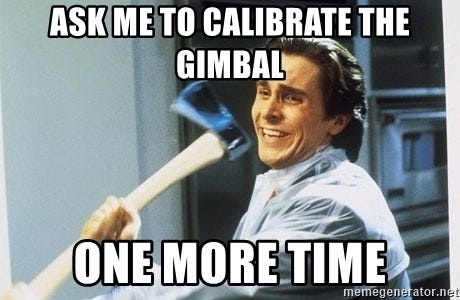
Here’s what I’d missed. A genuinely smooth move, like a real dolly or a crane, does look expensive. But a move that’s almost smooth looks cheap. Louder than no move at all. Because a floaty, barely stabilized glide is instantly recognizable as someone reaching for a shot they couldn’t land. The reach is the tell.
Only two camera choices reliably look expensive, and both are free:
Dead still. A locked off tripod shot, nothing drifting, looks composed and confident. Stillness is a flex.
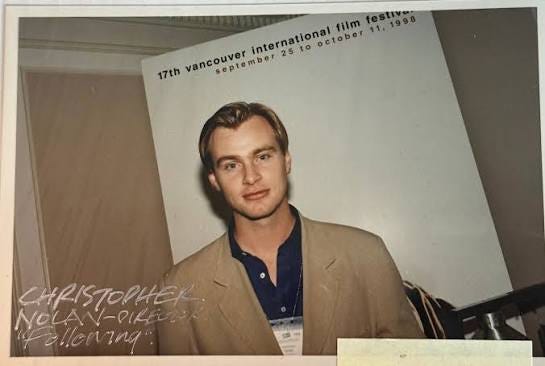
Committed handheld. Intentional movement that’s clearly a choice, not a failure to afford a tripod. Nolan shot his first film entirely handheld on purpose, so he’d never be faking the dolly shots he couldn’t pay for.
Everything in between is where cheap lives: the gimbal glide that wants to be a crane and isn’t.
So: if you can’t do a move perfectly, don’t do a mediocre version. Lock it off, or pick up the camera and mean it.
And remember what we covered previously. The eye goes to movement. Keep the camera still, and let the thing inside the frame move: the steam, the hair, the hand. Think about colors and composition.
That’s the look people call cinematic.
It was never the gimbal.

Warmly, AL.